
Halvah 101
Everything You Never Knew You Needed to Know About This Ancient, Nutty Candy
What Is Halvah, Anyway?
If you already know halvah, welcome home.
If you’ve never heard of it—don’t worry. You’re about to join a very delicious club.
Halvah (I use the spelling “halvah”) is a traditional sweet that’s been loved across the Middle East, Eastern Europe, and beyond for literally thousands of years. The kind I make is tahini-based—a blend of sesame paste, hot sugar syrup, and a little patience, all whipped together into that signature crumbly-then-melty magic.
Think: Your favorite nut butter meets a delicate fudge… minus the sugar coma.
It’s nutty.
It’s lightly sweet.
It melts like a dream.
And it somehow feels nostalgic even when it’s brand new to you.

How It’s Made (AKA: The Sesame Sorcery)
Halvah looks simple… but making it?
It’s a little bit art, a little bit science, and a little bit “don’t blink or you’ll mess it up.”
The basics:
Tahini (sesame paste) — the flavor, the body, the soul.
Hot sugar syrup — cooked to a very specific temperature.
The Mix — combining the two at exactly the right moment so the sugar crystallizes into that signature flaky, airy, sweet-crumbly texture.
Pour, set, swirl, breathe.
Cut, package, enjoy.
One second too hot or too cool and the whole batch can go rogue.
This is why halvah has survived millennia but remains a craft.
Each batch I make is small, intentional, and tuned by hand. No shortcuts. No factory fluff.
Why Halvah Is Basically a Superfood (Don’t Quote Me, But Still.)
Because it’s made from sesame seeds, halvah is naturally:
Vegan
Gluten-free
High in calcium
Packed with plant-based protein (about 5g per serving!)
Shelf-stable — no fridge needed
Rich without being overly sweet
It’s one of the rare treats grown-ups love because it actually feels good to eat.
A (Very) Short & Snackable History
Halvah has been around for over 3,000 years. That’s longer than most empires and definitely longer than any modern candy bar.
The name comes from the Arabic ḥalwā, meaning “sweet.”
It shows up in Israel, Iran, Turkey, Armenia, India, Greece, the Balkans… basically everywhere good food happens.
Different cultures make it differently—some use sesame, some use flour, some swirl in nuts, spices, or rosewater.
It often appears at holidays, celebrations, and family tables. It’s a comfort food with global citizenship.
Halvah is truly a cultural chameleon—same idea, countless interpretations.
The version I make is the classic sesame style, the type you’d find sliced from a giant slab in old-school Jewish delis (the exact halvah I adored as a kid visiting family).
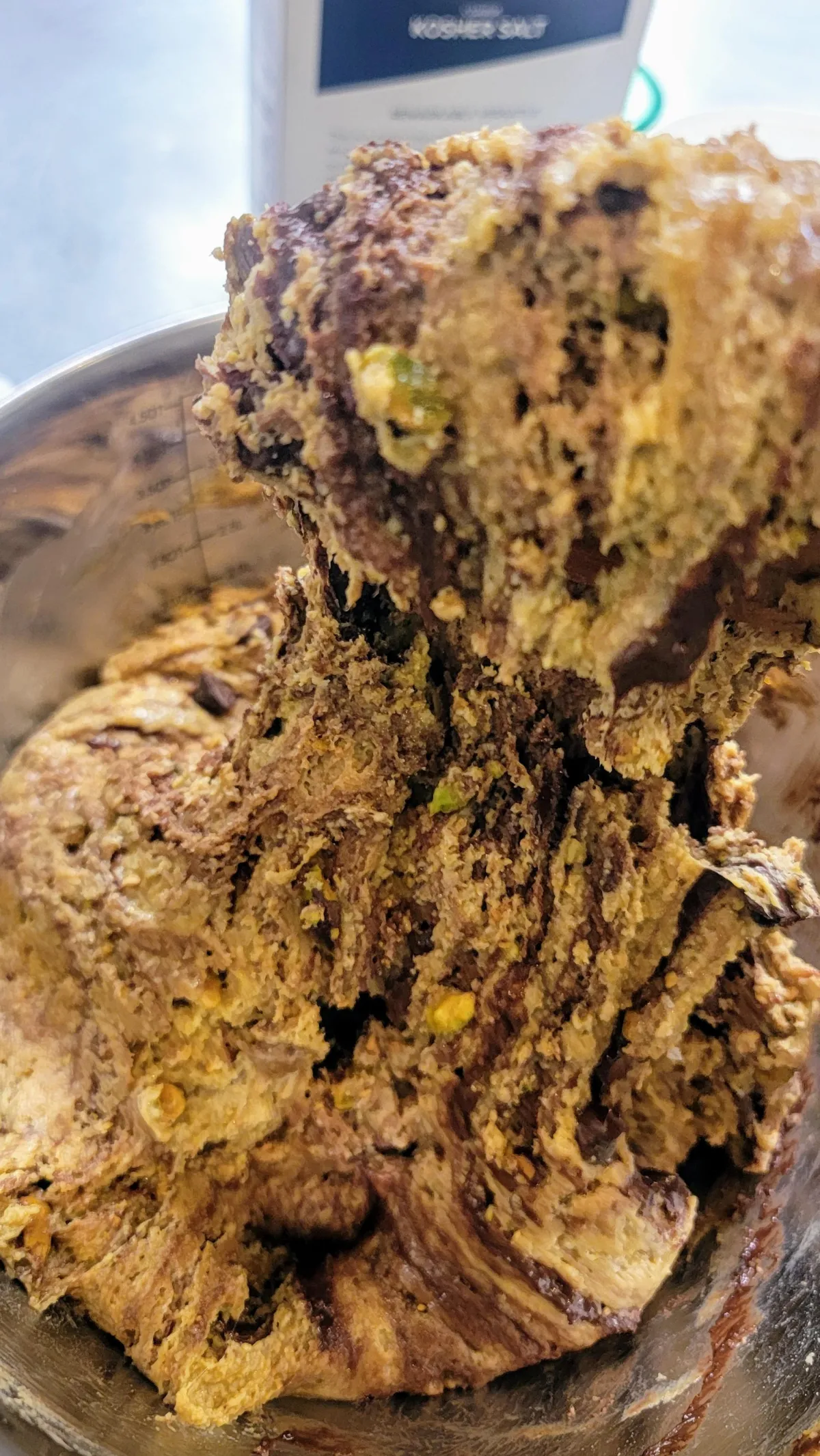
How to Enjoy Halvah (AKA: You Can’t Do It Wrong)
Eat it straight, obviously.
But also try:
Classic Pairings
Coffee
Strong black tea
Mint tea
Fruit (berries, peaches, citrus)
Surprising Pairings
Soft cheeses (brie, chèvre)
Whiskey or bourbon
Bold beers like stouts or porters
Sharp cheddar
Dark chocolate
Fun Ways to Use It
A perfect addition to a cheese and charcuterie board
Crumbled on yogurt, rice pudding or ice cream
Baked into cookies, cakes or brownies
As a sweet snack with nuts & dried fruit
Sliced on a dessert board
Halvah is basically a flavor canvas—and I love pushing it in new directions with spice, citrus, florals, nuts, or whatever idea won’t leave my brain alone.
Why My Halvah?
Because it's delicious!
Growing up, halvah was a special treat from those iconic deli counters on family visits to NY and LA. Years later, when I couldn’t find anything like that in Santa Fe, I did what any obsessed food maker does: I taught myself to make it.
Now it’s…
Handmade.
Small-batch.
A little nostalgic.
A little rebellious.
Always delicious.
Every flavor is a tiny adventure—just enough twist to feel modern, but always true to its roots.
Still Curious? A Few More Fun Facts
Halvah has over 3,000 years of street cred.
It’s naturally vegan—not fake vegan.
It’s a “melts but doesn’t melt” kind of candy (texture nerds, welcome).
It travels well—give it, stash it, hoard it.
It comes in logs, bricks, pucks, swirls… I make mine in small bricks and slices.
It’s having a bit of an artisanal comeback right now (and yes, I’m happily part of it).